Tree Removal Metairie for Small Lots and Urban Properties

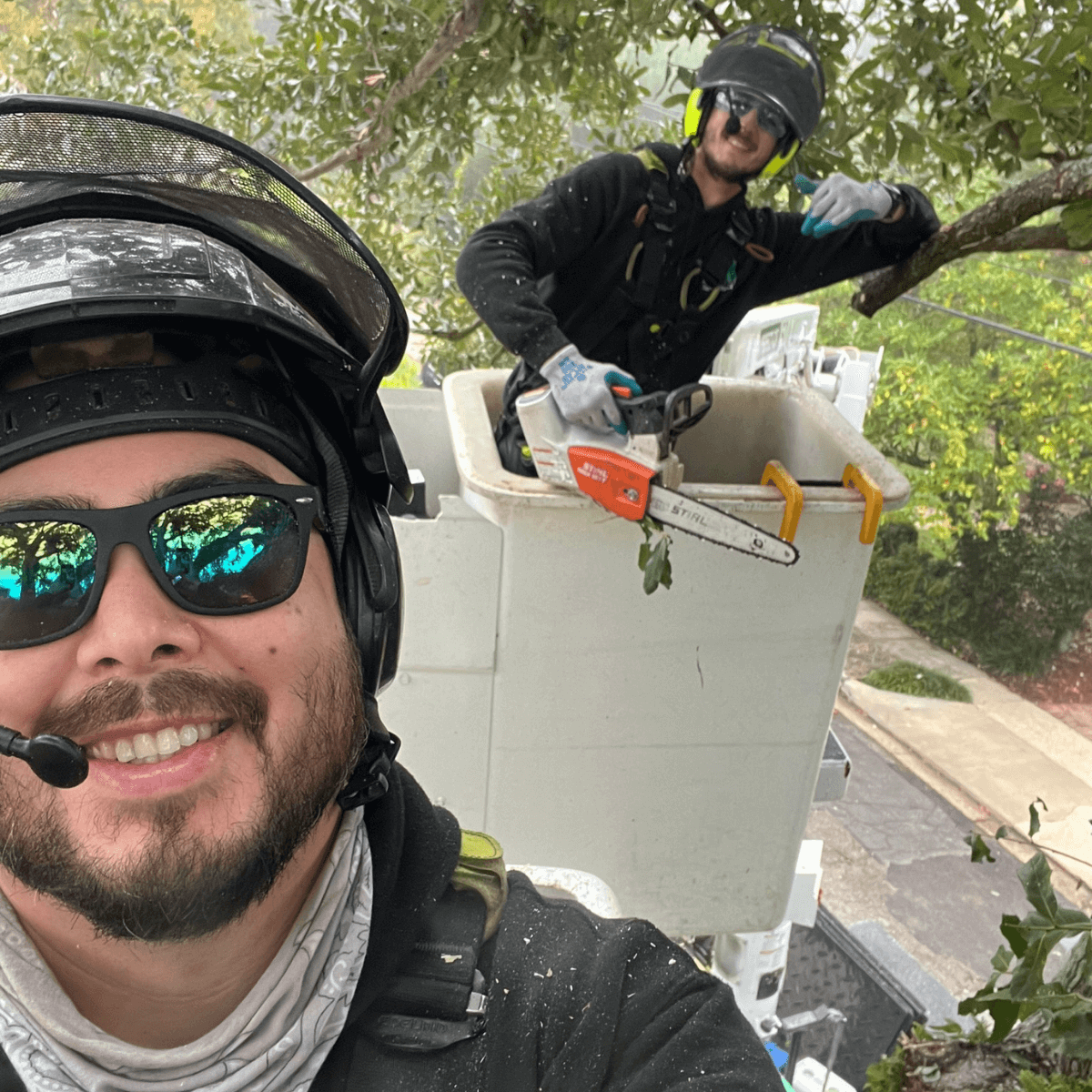
Tree work changes when the lot lines get tight.
On a large rural property, a crew may have room to drop a trunk in one piece, stage equipment on open ground, and carry brush to a burn pile or chipper without weaving around fences, sheds, cars, and power lines. In Metairie, that is often not the reality. Many homes sit on compact lots with mature trees growing close to roofs, patios, pools, driveways, neighboring structures, and overhead utilities. The margin for error is slimmer, and the planning matters as much as the cutting.
That is why tree removal in dense neighborhoods tends to be less about brute force and more about sequencing, rigging, access, communication, and judgment. A removal that looks straightforward from the street can become highly technical once a climber is in the canopy and the crew starts measuring swing paths, branch weight, and landing zones measured in feet, not yards.
For property owners searching for tree removal Metairie services, understanding those constraints helps set realistic expectations about cost, timing, noise, cleanup, and why one tree may be simple while another, of similar size, is anything but.
Why urban tree removal is its own discipline
A small lot does not automatically mean a small job. In practice, confined spaces often increase complexity. A 45 foot tree in an open field can be easier to remove than a 25 foot tree pressed between a garage, a rear fence, and a service line.
The first issue is access. If the crew cannot get a bucket truck, mini skid steer, or grapple close to the tree, every branch and wood section may tree removal metairie need to be climbed, cut, rigged down, hand-carried, or carted out in smaller pieces. That changes labor time immediately. It also changes fatigue, and fatigue is one of the factors experienced crews manage aggressively because tired people make poor decisions.
The second issue is exposure. On an urban property, there is usually something expensive within reach of the canopy. Clay tile roofs crack. Vinyl fences split. Pool screens tear. HVAC lines are easy to overlook until a limb lands where no one intended. Even when the tree itself is not especially large, the surrounding targets raise the precision required.
Then there is the question of neighboring property. In older parts of Metairie, branches often overhang lot lines. A removal can affect visibility, shade, drainage patterns, and even how exposed a backyard feels. People notice these things. The best removals are not just technically sound, they are well communicated before the first saw starts.
The kinds of trees that create problems on compact properties
Species, structure, and site conditions matter more than many homeowners realize. Some trees tolerate urban conditions for years, then fail all at once after a storm, prolonged saturation, or root disturbance from nearby construction. Others decline slowly and telegraph trouble through deadwood, fungal growth, bark loss, lean, or sparse canopy.
In Metairie, common concerns often involve mature shade trees planted decades ago, ornamental trees outgrowing their spaces, and volunteers that were never truly planned for the site. A fast-growing tree beside a slab, fence line, or drainage area can become a removal candidate not because it is inherently bad, but because it no longer fits the property.
Palm removals, while different from broadleaf hardwood work, can also become tricky on small lots. Their vertical profile makes them seem simple, but frond debris, confined access, and nearby roofs can still complicate the job.
One detail homeowners sometimes miss is that a healthy tree can still be the wrong tree in the wrong place. If root flare is pushing hardscape, limbs are scraping roofing, and the trunk sits too close to the foundation for long-term comfort, removal may be a site management decision rather than an emergency response.
What makes a removal “difficult” in Metairie
Difficulty is not measured by height alone. A seasoned arborist or removal crew will usually look at a mix of factors before quoting the work. The tree’s lean, wood condition, crown spread, and species all matter, but so do the invisible logistics around it.
A backyard tree with no alley access may require all debris to be moved through a side gate. If that gate is 36 inches wide, the equipment options shrink. If the yard has soft ground after rain, heavy machinery may not be appropriate. If the tree sits near service drops or utility poles, coordination becomes more restrictive. If there is a pool beneath the canopy, drop zones may disappear entirely.
Even the surface under the tree changes the approach. Brick patios chip. Decorative stone shifts. Artificial turf burns or gouges under heavy wood. Irrigation heads break easily under repeated foot traffic and dragging brush. These are small details until they become replacement costs.
A good estimator notices them early. In my experience, the difference between a smooth urban removal and a stressful one often comes down to what was identified before the job, not what was improvised during it.
The planning phase homeowners rarely see
By the time a crew begins cutting, much of the important thinking should already be done. On tight residential jobs, removals are often divided mentally into dozens of small decisions. Where will brush accumulate before chipping? Which limbs come first to create safe working room? Can wood be lowered by rope without pendulum swing into a fence corner? Is there enough clearance to piece out trunk sections vertically, or will some sections need to be smaller than usual?
That planning also includes understanding escape routes and crew spacing. Small lots compress people together. A setup that might be acceptable on a large property becomes unsafe when there is no room to step away from a dropped limb or swinging rigging line.
Homeowners usually judge professionalism by punctuality, visible equipment, and cleanup. Those matter. But the deeper sign of competence is often quieter. It is the crew leader walking the property twice. It is cones and plywood placed before saws come out. It is a climber taking an extra minute to redirect a line because the first angle is not ideal. Those choices do not look dramatic, yet they prevent the damage and close calls people remember for years.
Piece-by-piece removal versus felling
Most urban removals in Metairie are not straight felling operations. They are dismantles. That means the tree is removed in sections, usually starting with outer limbs, then larger scaffold branches, then upper trunk, then lower trunk. The work may involve climbing, a bucket truck where access allows, or a crane on certain high-exposure jobs.
This method is slower, but it is often the only responsible option on small lots. Lowering branches by rope allows the crew to control descent, avoid impact, and place material where it can be processed. It also protects the neighboring property line, which is often only a few feet away.
People sometimes ask whether piece-by-piece removal is excessive for a medium-sized tree. Usually it is not. If the canopy extends over a roof or the stem leans toward a structure, sectioning the tree is basic risk management, not overkill.
There are times when a limited directional fell is possible, even in suburban settings, but those opportunities are narrower than many assume. A clear landing zone must exist, and the wood must be sound enough for predictable hinge behavior. On storm-damaged or decayed trees, predictability drops fast.
Weather, saturated ground, and storm season
Anyone familiar with southeast Louisiana knows that weather is not a side note. It is central to scheduling. Wet lawns rut easily under weight. Gusty afternoons can shut down climbing or crane work. Storm season compresses demand, and after a major event, response times can stretch because every crew in the area is triaging urgent hazards.
Saturated root zones create another problem. A tree may stand through normal conditions, then shift after days of rain because compromised roots lose holding strength in softened soil. This is one reason removals sometimes move from “sometime this season” to “as soon as possible.” The tree has not necessarily changed overnight in visible ways, but site conditions have changed around it.
Homeowners often ask whether it is better to remove a questionable tree proactively or wait until hurricane season passes. In many cases, earlier is wiser. Once the schedule fills with emergency work, non-emergency removals become harder to book, and a tree that looked manageable in spring may become a serious liability under summer storm conditions.
Signs a tree on a small lot may need removal
Not every concern means a tree should come down. Mature trees add shade, privacy, habitat, and value when they are structurally sound and well placed. But certain indicators deserve a careful look, especially when there is little clearance around the tree.
Some warning signs are easy to notice, while others are subtle enough that homeowners dismiss them for too long.
- Repeated limb drop, especially from the same side of the canopy or from large diameter branches.
- A visible lean that has worsened, particularly after storms or prolonged rain.
- Cracks, cavities, or fungal growth near the base, root flare, or major branch unions.
- Canopy dieback, sparse leafing, or sections that fail to flush out normally in season.
- Root damage from trenching, paving, or recent construction close to the trunk.
One caution is worth adding here. A tree can show one of these signs and still be retainable tree removal metairie with pruning, support, or monitoring. The opposite is also true. A tree can look green and vigorous while carrying hidden structural defects. That is why site-specific evaluation matters more than internet photos or neighbor opinions.
Cost factors that surprise homeowners
People usually focus first on tree size, and size does matter. But on urban properties, complexity drives price just as much as dimensions. Two trees of similar height can differ dramatically in removal cost because one allows equipment access and easy brush handling while the other requires full manual rigging over a roof and fence.
The largest cost drivers usually include access restrictions, proximity to structures, wood condition, debris volume, haul-off requirements, and whether stump grinding is included. Utility conflicts can also affect scope. If a line runs through the canopy, the work may require a more constrained approach, or in some cases coordination beyond the tree crew itself.
Cleanup expectations matter too. “Tree removal” can mean different things to different homeowners. Some expect every twig gone, sawdust raked, and trunk rounds hauled away. Others want to keep firewood or mulch. Clarifying that up front avoids friction later.
There is also a practical truth that experienced crews know well. Jobs on tight lots take more time than they appear to. A half-day estimate can become a full day once rigging, hand-carrying, and surface protection are accounted for. That is not inefficiency. That is what careful work looks like in a confined setting.
Stump removal on small lots
After the tree is gone, the stump becomes its own question. On spacious properties, a stump may be left temporarily without much inconvenience. On small lots, it can be a trip hazard, a mower obstacle, or simply one more thing taking up limited usable space.
Grinding is the usual choice, but even that depends on access. If the stump grinder cannot fit through the gate, options narrow. In some cases, crews use smaller grinders and accept a slower process. In others, the stump may need to be cut lower and addressed later if landscape work is already planned.
Homeowners should also ask about subsurface concerns. Irrigation lines, drainage piping, invisible dog fences, and shallow utilities can be vulnerable during grinding. On compact properties where many systems occupy a small footprint, marking and communication are especially important.
Another practical issue is spoils. Grinding creates a large volume of chips mixed with soil. On a small urban lot, there may not be a good place to leave that material. Hauling it away is possible, but it changes labor and disposal needs. This is another detail best settled before the job day.
Protecting the rest of the landscape
A skilled removal should solve a problem, not create three new ones. Yet in urban settings, secondary damage is one of the most common homeowner complaints. Lawn rutting, broken shrubs, cracked edging, and scarred fences usually happen when the crew underestimates how little room there is to work.
Protection measures do not need to be dramatic, but they need to be deliberate. Plywood or mats may be used to spread weight. Brush should be staged where repeated dragging will not strip bark off nearby ornamentals. Heavy wood should not be rolled across decorative beds just because it is faster. On narrow side yards, simple padding against a fence or wall can prevent expensive cosmetic damage.
This is where experience shows. Crews accustomed to open commercial sites sometimes struggle on compact residential properties because the pace and precision are different. Every trip through a gate matters. Every turn of a wheelbarrow matters. Every branch angle matters.
Working around neighbors without making enemies
Tree removal is noisy, visible, and hard to ignore. In close-set neighborhoods, the social side of the job matters more than many contractors admit. A branch crossing the fence line is not just a technical issue. It is a relationship issue.
Good crews think about neighbor impact early. They avoid dropping debris onto adjoining property unless there is explicit agreement. They manage parking so trucks do not block more of the street than necessary. They clean shared spaces like sidewalks and curb lines before leaving. These choices help because even a justified removal can create tension if people feel blindsided.
For homeowners, a brief heads-up to adjacent neighbors often pays off. It can be as simple as letting them know the date, likely start time, and whether access to a rear corner might be needed. In older neighborhoods, that courtesy tends to reduce complaints and speculation.
Choosing the right company for tree removal Metairie jobs
Not every tree service is equally suited to small-lot urban work. The basics still matter, of course, but the best fit is a company that can explain how it plans to handle access, rigging, property protection, debris flow, and cleanup on your specific site.
When evaluating contractors, it helps to listen for clear, practical thinking rather than sales language. A strong estimator can usually explain why a tree will be climbed instead of bucketed, why a crane is or is not justified, how the crew will protect a pool deck, and what happens if weather shifts the schedule.
A few questions are especially useful:
- How will the crew access the tree and remove debris from the property?
- What measures will be used to protect roofs, fences, hardscape, and lawns?
- Is stump grinding included, and if so, how will the grinder reach the stump?
- What cleanup is included at the end of the job?
- Are there any conditions that could change the price or timing once work begins?
The answers should be specific. “We’ll figure it out on site” is not reassuring when the tree hangs over your house and the side yard is barely wide enough for a mower.
When removal is not the best answer
It is worth saying plainly that removal should not be the default recommendation for every tree concern. On small lots, pruning, canopy reduction within reasonable limits, deadwood removal, weight reduction on overextended limbs, or ongoing monitoring may buy years of safe retention. Sometimes root zone improvements or simply changing how a space is used can reduce conflict enough to keep a mature tree in place.
That said, there are situations where delay creates more risk than value. Severe decay at the base, major root failure, repeated storm damage, or a tree that has clearly outgrown a constrained site can push the decision toward removal. Good judgment lives in that middle ground, where the answer is based on condition and context, not emotion alone.
Homeowners are often attached to mature trees, and understandably so. They cool yards, frame homes beautifully, and give older neighborhoods much of their character. A professional tone matters here. People do not just lose a plant when a large tree comes down. They lose shade, privacy, and a piece of the landscape they may have lived with for decades. Respecting that reality is part of doing the job well.
What a well-run removal looks like
When tree removal on a small urban property is handled correctly, it can seem almost uneventful to the homeowner. That is usually the mark of a strong crew. The work should feel organized. The movements should look intentional. The site should stay as controlled as possible from first cut to final cleanup.
There will still be noise. There will still be sawdust, rigging lines, and a fair amount of movement. But there should not be confusion, last-minute improvisation around obvious obstacles, or preventable damage to the property. By the time the trucks pull away, the tree should be gone, the debris should be managed as agreed, and the site should feel stable again.
For anyone weighing tree removal Metairie services on a compact lot, that is the standard worth aiming for. Not the lowest bid in a vacuum, and not the flashiest promise, but a crew that understands how urban removals actually work, where the risks really are, and how to execute the job cleanly when space is limited and the details matter.
A Perfect Cut Tree Service
4725 Shores Dr, Metairie, LA 70006
+1 504-732-0779
FAQ About tree removal metairie
What is the average cost of tree removal in my area?
There is no single price that fits every tree. Size, condition, access, nearby structures, equipment, debris hauling and stump work affect the estimate. Request a written, site-specific quote that identifies what is included.
Who will remove trees for free?
Free removal is not generally available for ordinary private-property tree work. Utilities or public agencies may handle trees within their responsibilities. Confirm eligibility directly and do not assume that an offer or assistance program covers your tree.
Can I just cut down a tree in my yard?
Check ownership, location and local requirements first. Jefferson Parish requires a permit for removal of qualifying vegetation in the public right-of-way, and additional protections may apply in designated areas. Ask the parish about your property and have a qualified tree professional assess the work.